
British Citizenship for Children: Understanding the MN1 Application
If your child is under 18 and wasn’t automatically born British, they may still be eligible to register as a British citizen using Form MN1. This is one of the most common routes to British citizenship for minors and covers a range of scenarios — including those where parents are British, become British later, or where the child has strong ties to the UK.
Here’s everything you need to know.
What Is Form MN1?
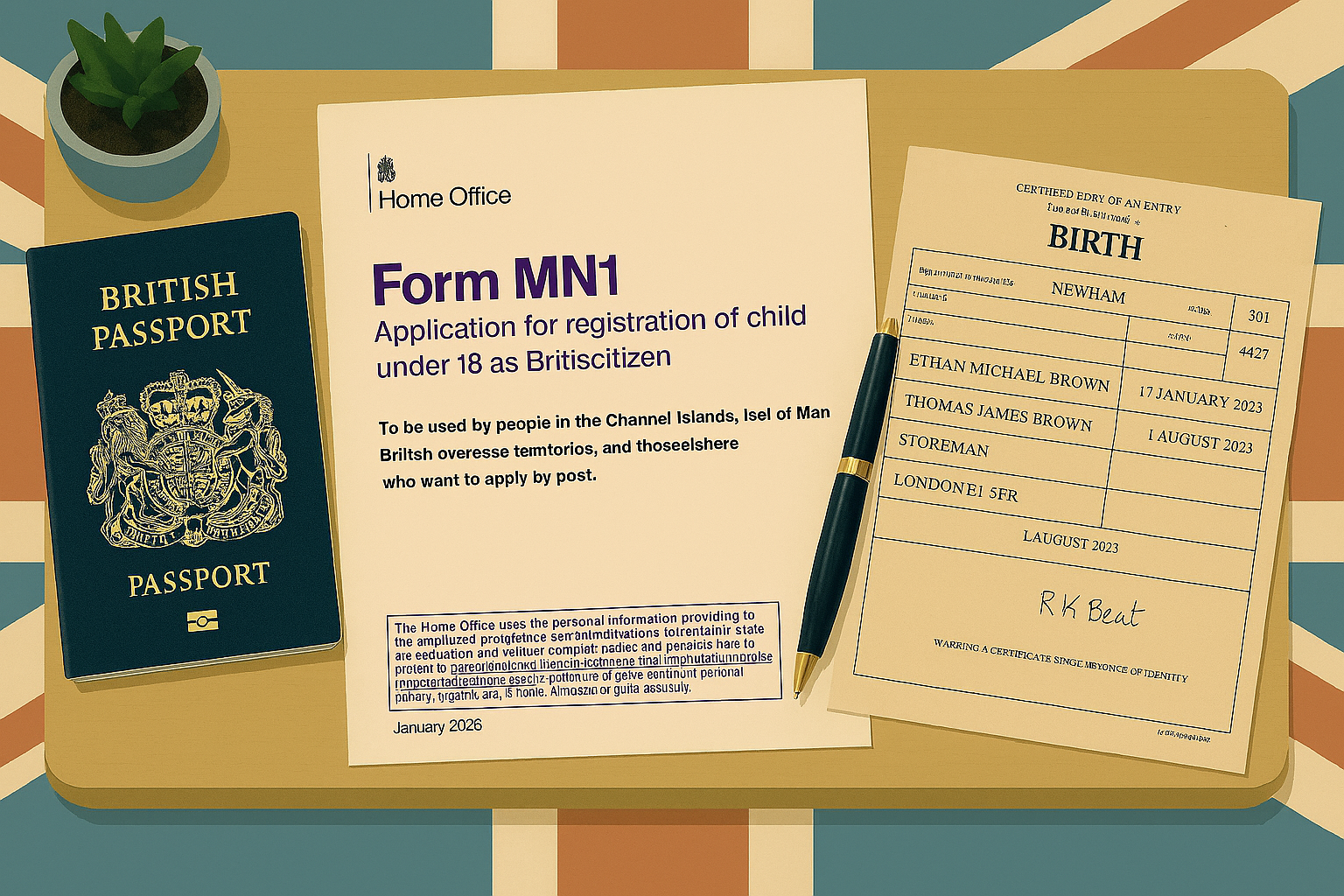
Form MN1 is used to apply to register a child under 18 as a British citizen under provisions of the British Nationality Act 1981. Children do not “naturalise” like adults — instead, they are registered either by entitlement or at the discretion of the Home Secretary.
Who Can Use Form MN1?
There are two broad categories under which a child can apply:
1. By Entitlement (Automatic Right)
This means the Home Office must register the child if the legal requirements are met.
Some common entitlement routes:
- Section 1(3):
Child was born in the UK, and one parent became British or settled after their birth. - Section 1(3A):
Child was born in the UK to parents in the Armed Forces. - Section 3(2):
Child was born abroad, and the parent is British by descent. The British parent’s own parent (i.e. grandparent) must have lived in the UK for at least 3 years before the child’s birth. - Section 3(5):
Child was born abroad and has lived in the UK with both parents for at least 3 years before applying. The British parent must also be a citizen by descent. - Section 4D:
For children born to parents serving in the Armed Forces overseas after 13 January 2010.
2. By Discretion (Section 3(1))
This is the most flexible route. The Home Secretary may register a child under 18 if it’s considered in the child’s best interests.
This route is often used in the following scenarios:
- A child was born outside the UK and a parent has since become a British citizen (e.g. through Section 4L or naturalisation).
- A child has strong connections to the UK (e.g. has lived in the UK for many years).
- A child is in the UK under the care of British citizen parents or guardians.
- There are exceptional or compassionate circumstances that justify registration.
This route is not automatic — it is assessed case-by-case. The Home Office considers:
- The child’s residence in the UK,
- Education, family ties, and cultural integration,
- The parents’ immigration status,
- The child’s best interests.
Required Documents
Documents vary by route, but generally include:
Standard Documents:
- Child’s full birth certificate (vault copy for SA births)
- Parents’ marriage certificate (if applicable)
- Parent(s)’ British citizenship evidence, e.g. passport or registration certificate
- Proof of residence in the UK (if claiming under sections 3(5) or 3(1))
- Consent letters from both parents
- Good character declaration (if child is aged 10 or over)
Additional documents will apply based on the specific section under which you’re applying.
Fees & Timeline
- Application Fee (2025): £1,214
- Biometric enrolment fee: Included in the main fee
- Processing time: Typically 2 to 6 months, though it can be longer depending on complexity.
There is no English language requirement and no Life in the UK Test for children.
Common Scenarios Where MN1 Applies
- A child born in South Africa whose parent becomes British via Section 4L (MN1 under Section 3(1))
- A child born in the UK to non-British parents who later become British or settled (MN1 under Section 1(3))
- A child with a British grandparent who lived in the UK (MN1 under Section 3(2))
- A child with long residence in the UK and British siblings/parents (MN1 under Section 3(1))
Important Notes
- Applications must be made before the child turns 18.
- Once registered, the child is a British citizen “otherwise than by descent”, meaning they can pass citizenship on to their own children born abroad.
- Registration is final — there is no right of appeal, so the application must be done carefully.
Need Help?
The MN1 route is powerful but often misunderstood. Whether your child is eligible by entitlement or needs to rely on discretion, we can help you:
- Understand which section applies,
- Gather the correct documents,
- Avoid unnecessary delays or rejections.